
DIY Garage Floor Epoxy vs Hiring a Pro: What Florida Homeowners Should Know
· By Helio Lopes de Gois
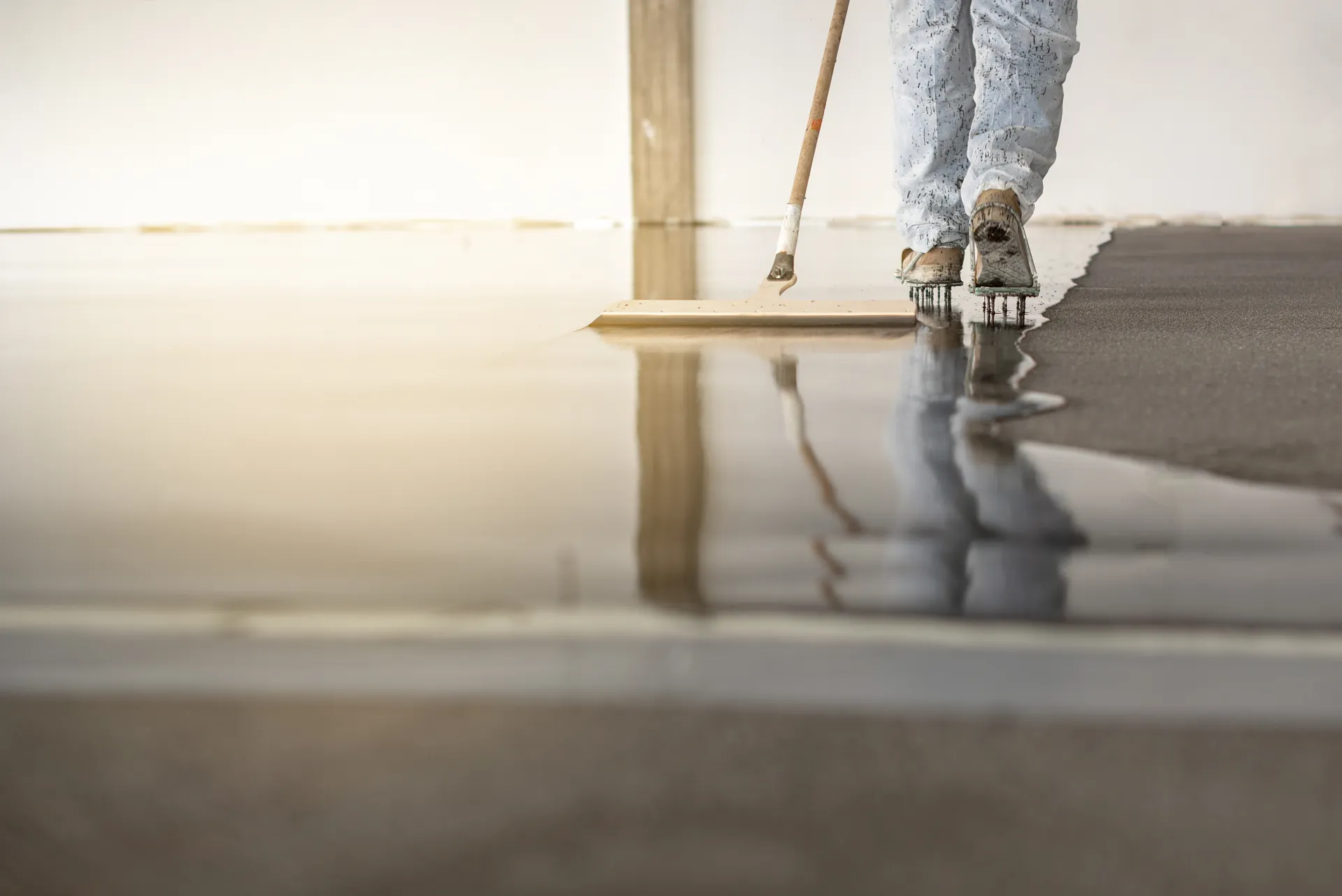
Walk down the aisle at any home improvement store in Central Florida and you will find a garage floor epoxy kit that promises a showroom finish for a couple hundred dollars. It is a tempting picture: a free weekend, a paint roller, and a garage that looks brand new by Sunday night. For some slabs, that is exactly how it goes. For many Florida garages, the story ends differently a season or two later, with a coating that is peeling at the edges, yellowing in the sun, or lifting off in sheets under a hot tire.
The honest answer to 'should I do it myself or hire a pro?' is that it depends on your slab, how you use the garage, and how long you want the floor to last. This guide breaks down what a DIY kit delivers, where it tends to fail in Florida's climate, what a professional install does differently, and the hidden costs most homeowners never see coming.
What You Actually Get in a Big-Box DIY Kit
Most DIY garage floor kits sold at big-box stores are a roll-on epoxy system. You get a jug of resin, a jug of hardener, a bag of decorative flakes, and usually an acid etch packet meant to prep the concrete. You mix the two parts, roll it on like paint, toss flakes over the wet surface, and let it cure.
The core limitation is in that word 'roll-on.' The coating is thin, often a single pass, and it bonds to the surface only as well as the prep underneath it allows. Kits rely on acid etching to open up the concrete, but etching is far weaker than mechanical grinding. It cleans and lightly roughens the top layer without truly profiling the slab, so the coating has less to grip.
Standard DIY epoxy is also not built to shrug off ultraviolet light, so many epoxies amber and yellow over time in Florida sun. On the shelf the kit looks like a bargain. The real question is how that thin, etch-prepped layer holds up once a Florida summer goes to work on it.
Why Florida's Climate Is Hard on DIY Coatings
Central Florida is one of the tougher environments in the country for a garage floor coating, and the reasons stack up fast. Heat is the big one. A closed garage can bake all afternoon, and the underside of a tire that just rolled in off hot asphalt can be hotter still. That heat softens weak coatings and pulls at the bond. The result is 'hot tire pickup,' where the coating literally lifts off with the tire.
Humidity and moisture are the second problem. Florida concrete often carries moisture that moves up through the slab. If a thin epoxy is not bonded to a properly ground surface, that vapor pressure can push it loose from below. Humidity also makes DIY timing tricky, because high moisture in the air slows and disrupts the cure, leaving soft or hazy spots.
Then there is the sun. Ultraviolet exposure ambers standard epoxy, so a floor that started crisp and gray can drift yellow near the door within a year or two. Add the daily grind of hot tires parking in the same spots, and a thin roll-on system in Florida is fighting an uphill battle from day one.
The Labor Is Harder Than It Looks
The marketing photos make DIY look like painting a wall. In practice, the prep and the timing are where weekend projects go sideways. Cleaning years of oil, tire marks, and dust out of concrete is heavy work, and any spot you miss becomes a spot where the coating will not stick. Acid etching means handling chemicals, rinsing thoroughly, and getting the slab to the right dampness before you coat.
Timing is the quiet killer. Two-part coatings have a working window, and once you mix, the clock is running. In Florida heat and humidity that window shrinks, so you are racing to spread material evenly and broadcast flakes before it starts to set. Move too slowly and you get roller marks, thin spots, and uneven flake. Rush it and you get puddles and missed coverage.
None of this is impossible for a careful, handy homeowner on a small, low-use slab. But it is real physical work, and mistakes usually do not show up until weeks later when the coating starts to fail in the spots that were rushed or under-prepped.
What a Professional Install Does Differently
A professional garage floor system is built around the prep, not the paint. The slab is mechanically diamond ground, which opens the concrete to a consistent profile so the coating can bond deep into the surface instead of sitting on top of it. That single step is the biggest reason a pro floor outlasts a roll-on kit, because a strong mechanical bond is what resists hot tire pickup and moisture pressure.
The coating itself is a different class of material. A common professional buildup is a polyurea or polyaspartic base coat, a full broadcast of decorative flake, and an ultraviolet-stable polyaspartic top coat. Polyaspartic tops are made to resist yellowing in sunlight and to shrug off the heat, chemicals, and abrasion a working Florida garage throws at them. The finished floor is thicker, tougher, and color-stable in a way a thin epoxy is not.
Because these systems cure fast, the whole process is typically a one-day install: grind, coat, flake, top coat, and let it set. You get a floor that was prepped correctly the first time, installed by someone who does it every day, and backed by a written warranty rather than a hope that the weekend went well.
The Hidden Costs of DIY (and When It Still Makes Sense)
The sticker price on a DIY kit is not the real number. If a roll-on coating fails, you rarely get to simply recoat over it. A peeling or delaminating floor has to be stripped or ground back off, which is dirty, labor-intensive work, and then the slab has to be prepped and coated all over again. Homeowners who go DIY first and hire a pro later often pay for the floor twice.
Weigh that against how you use the space. If you have a low-stakes, low-use slab, think a storage shed, a workshop that never sees a hot car, or a garage that stays shaded and lightly loaded, a careful DIY kit can genuinely do the job and save money. There is no shame in a roll-on floor for a floor that will never be tested.
But for a daily-driver Florida garage, one that gets afternoon heat, hot tires parking in the same spots, and humidity coming up through the slab, the math usually favors a professional install. Paying once for a diamond-ground, ultraviolet-stable system that is done right and warranty-backed tends to cost less over the life of the floor than paying for a kit, paying to remove it, and paying for the pro job you needed all along.
How to Decide for Your Garage
Start with three honest questions. How much sun and heat does the garage actually take? How heavily do you use it, and do hot tires park in the same spots every day? And how long do you want the floor to look good, one or two seasons or many years? Your answers point you toward the right choice more reliably than the price tag on the shelf.
If the slab is lightly used, shaded, and you are comfortable with real prep work and tight timing, DIY is a reasonable experiment. If the garage is a working part of a Florida home and you want a floor that stays put through the heat and stays gray in the sun, a professional polyaspartic flake system is the stronger value.
The good news is you do not have to guess. A quick look at your slab and how you use it is usually enough to know which way to go, and a free quote costs nothing but a few minutes. Get the numbers in front of you, compare them against the real cost of doing it twice, and decide from there.
Frequently asked questions
- Why do DIY epoxy garage floors peel in Florida?
- The most common reason is weak prep combined with heat. DIY kits rely on acid etching instead of mechanical diamond grinding, so the coating grips only the top layer of the concrete. In Florida, hot tires and afternoon heat pull at that weak bond, and moisture rising through the slab pushes from below, which together cause peeling and hot tire pickup, often within a season or two.
- Does DIY garage floor epoxy turn yellow?
- Standard epoxy is not ultraviolet stable, so sunlight can amber and yellow it over time. In a Florida garage that gets direct sun through an open door or windows, a DIY epoxy floor can start to yellow within a year or two. Professional systems use an ultraviolet-stable polyaspartic top coat specifically to resist that color change and stay true to the original finish.
- What is the main difference between a DIY kit and a professional install?
- The biggest difference is surface preparation. A pro mechanically diamond grinds the concrete to create a deep, consistent profile so the coating bonds into the slab, while DIY kits use a lighter acid etch. Pros also use tougher, ultraviolet-stable materials such as a polyurea or polyaspartic base with a polyaspartic top coat, which are thicker and more heat resistant than the thin roll-on epoxy in most kits.
- Is a professional garage floor coating worth the extra money in Florida?
- For a garage that sees real heat, hot tires, and humidity, it usually is. A professional floor is diamond ground, built with ultraviolet-stable materials, and backed by a written warranty, so it is far more likely to last without failing. Homeowners who DIY first often pay again later to strip the failed coating and redo it, which can cost more than hiring a pro once.
- Can I ever just do it myself?
- Yes. For a low-stakes, low-use slab that stays shaded and never parks a hot car, such as a storage area or light workshop, a carefully applied DIY kit can hold up fine and save money. The key is honest prep and respecting the material's timing. The trouble comes when a thin roll-on kit is asked to survive a hot, humid, daily-use Florida garage.
Related services
Serving
Ready for an exact price?
Get a free, no-pressure in-home estimate. Real numbers for your home, not a phone guess.