
Epoxy vs Polyaspartic Garage Floors: Which Is Better in Florida?
· By Helio Lopes de Gois
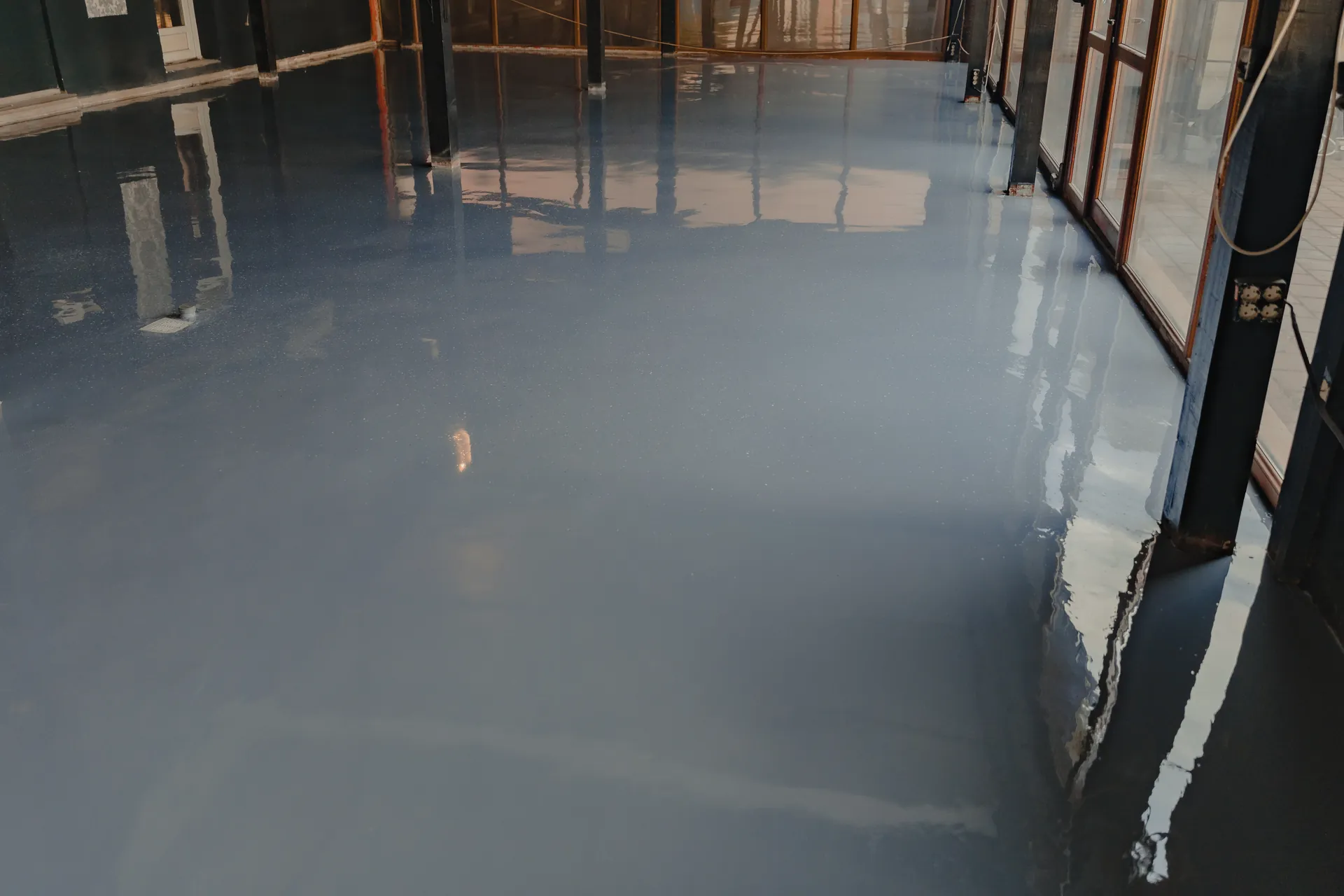
If you are shopping for a garage floor coating in Central Florida, you have probably run into two words over and over: epoxy and polyaspartic. They get used almost interchangeably, and a lot of quotes lump them together, but they are different chemistries that behave very differently once a Florida summer gets to work on them. The gap shows up in cure time, how the finish handles direct sun, and how the coating reacts when a hot tire or 95-degree slab pushes on it day after day.
This is a fair, technical comparison, not a sales pitch. Each material has real strengths, and there are jobs where a straight epoxy is a reasonable choice. But for an open garage near Orlando that sees heat, humidity, and UV bleeding in through the door, the chemistry points in one direction. Here is how the two stack up on the factors that actually decide how long your floor looks new.
The Core Chemistry: Epoxy vs Polyaspartic
Epoxy is a two-part thermosetting coating: a resin and a hardener that react to form a rigid, dense film. It is the material inside most big-box store garage floor kits and a large share of budget installs. Rolled on, it self-levels into a hard, glossy shell that bonds well to properly prepared concrete. The tradeoff is that a fully cured epoxy is rigid and relatively brittle, and it is sensitive to sunlight.
Polyaspartic is a fast-reacting subset of the polyurea family, an aliphatic coating engineered for durability and light stability. It cures far faster than epoxy, stays flexible instead of turning brittle, and resists ambering under UV. Because it is aliphatic, it does not yellow the way standard epoxy does when the sun reaches it.
This is why most professional garage systems in Florida are not a single product at all. A common build is a polyurea base coat for adhesion and deep penetration into the concrete, a decorative flake broadcast for grip and appearance, and a polyaspartic top coat for UV stability and abrasion resistance. That layered hybrid is what people usually mean when they say they got a polyaspartic floor.
Cure Time and the One-Day Install
The most obvious practical difference is speed. Epoxy cures slowly. Each coat typically needs many hours to a full day before the next step, and the floor often needs several days before it is ready for foot traffic and longer still before you can park on it. In a humid Florida garage, that slow cure window can stretch out and invites dust, bugs, and moisture into a finish that has not set.
Polyaspartic cures in a fraction of that time, often measured in an hour or two per coat rather than a day. That is what makes a genuine one-day install possible: grind and prep the concrete, lay the base coat, broadcast the flake, scrape and top coat, and the floor is walk-ready that evening and drive-ready within roughly a day. Fewer open hours also means fewer chances for contamination to land in wet coating.
The flip side is that polyaspartic's short working time demands an experienced crew. Once it is mixed, it does not wait. That is a reason to lean on a professional install rather than a weekend kit for this material.
UV Stability and Yellowing in the Florida Sun
This is the factor that matters most in Central Florida and the one homeowners are most often surprised by. Standard epoxy is not UV stable. When sunlight hits it, the resin ambers over time, meaning a white, gray, or light-toned floor takes on a yellowed cast. In a closed interior room that may never be an issue, but a garage is not a closed room. Every time the door goes up, and along the strip of floor nearest the opening, UV pours in. On a Florida-facing garage, that yellowing can start within the first year or two.
Polyaspartic, being aliphatic, is formulated to resist that ambering. It holds its color and clarity under sustained UV exposure, which is exactly the stress a Florida garage delivers. If your floor gets real daylight, this alone is a strong argument for a polyaspartic top coat, because no amount of surface prep fixes a resin that yellows by design.
Hot-Tire Pickup and Heat-Cycle Flexibility
Hot-tire pickup is the classic garage-coating failure. Tires heat up on the road, and when a hot tire sits on a coated floor, it can grab the coating and peel it away as the car cools and the rubber contracts, leaving bare patches where you park. Rigid coatings with weaker adhesion are more prone to this. A well-bonded polyaspartic and polyurea system, laid over properly ground concrete, resists hot-tire pickup much better because the bond into the slab is strong and the film stays flexible instead of cracking free.
Flexibility matters for a second reason unique to hot climates: heat cycling. A Florida slab expands and contracts as it swings from a cool morning to a baking afternoon, day after day. A brittle coating fights that movement and is more likely to develop hairline cracks, chips, and delamination over time. A flexible polyaspartic film moves with the concrete and absorbs that stress. Over years of Florida summers, that difference in flexibility is a major driver of which floor still looks intact and which one is chipping at the edges.
Abrasion and Chemical Resistance
Both materials are far tougher than bare or painted concrete, and both shrug off the everyday chemistry of a garage: motor oil, brake fluid, coolant, road salt, and household cleaners. Epoxy is genuinely hard and holds up well to impact and chemical spills, which is part of why it earned its reputation.
Polyaspartic generally offers stronger abrasion and scratch resistance at the wear surface, which is why it is so often used as the top coat even in systems built on another base. In a real-world hybrid, you get the best of both: a base layer that grips the concrete and a polyaspartic top layer engineered to take the daily grind of tires, tools, jack stands, and dragged bins. For chemical resistance, the practical takeaway is that a quality version of either will protect the slab. Where polyaspartic pulls ahead is holding that protection under sun and heat rather than just in a controlled indoor space.
Cost, Value, and the Right Call for Central Florida
On raw material and a DIY kit, epoxy is cheaper up front, and that is its honest advantage. If budget is the only priority and the floor lives in full shade with no direct sun, a well-prepped epoxy can serve for years. That is a legitimate use case, and it would be dishonest to pretend otherwise.
For most Central Florida garages, though, the value math favors polyaspartic. It installs in a day instead of tying up your garage for the better part of a week, it holds its color instead of yellowing at the door, it flexes through heat cycles instead of cracking, and it resists the hot-tire pickup that ruins so many parking spots. A coating that still looks new after several Florida summers is cheaper per year than one that ambers and chips and needs redoing.
The bottom line: for a hot, sunny, humid garage in the Orlando area, a polyurea base with a polyaspartic top coat and a full flake broadcast is the better engineering fit. Epoxy is not bad chemistry, it is simply the wrong chemistry for direct Florida sun and heat. That is why our systems are built on polyaspartic for exactly these conditions.
Frequently asked questions
- Is polyaspartic really better than epoxy for a Florida garage?
- For most Florida garages, yes. Polyaspartic is UV stable so it resists the yellowing that standard epoxy shows near an open garage door, it stays flexible through the daily heat cycling of a hot slab instead of cracking, and it cures fast enough for a one-day install. Epoxy is a solid coating in full shade on a tight budget, but Florida sun and heat expose its weaknesses. That is why professional Central Florida systems lean on a polyaspartic top coat.
- Why does an epoxy garage floor turn yellow?
- Standard epoxy is not UV stable. Sunlight breaks down the resin over time and causes it to amber, so light-colored floors take on a yellow cast. In a garage, the sun reaches the floor every time the door opens and along the strip nearest the opening, so yellowing tends to start there. Polyaspartic is an aliphatic coating engineered to resist that ambering, which is why it holds its color under sustained UV.
- What is a polyaspartic hybrid or polyurea system?
- Most professional garage floors are not one product. A common build layers a polyurea base coat for strong adhesion into the concrete, a decorative flake broadcast for grip and appearance, and a polyaspartic top coat for UV stability and abrasion resistance. People often call the whole system a polyaspartic floor. Combining the layers gives you a deep bond, a flexible film, and a top surface built to take daily wear.
- Can a garage floor coating really be installed in one day?
- Yes, with polyaspartic. Because it cures in roughly an hour or two per coat instead of a day like epoxy, an experienced crew can grind the concrete, apply the base coat, broadcast the flake, and lay the top coat within a single day. The floor is typically walk-ready that evening and ready to park on within about a day. A faster cure also means fewer hours for dust or bugs to land in the wet finish.
- What is hot-tire pickup and does polyaspartic prevent it?
- Hot-tire pickup happens when a hot tire sits on the floor, grabs a poorly bonded coating, and peels it up as the tire cools and contracts, leaving bare patches where you park. It is a common failure with rigid coatings that do not bond well. A properly ground concrete slab finished with a flexible, well-adhered polyaspartic and polyurea system resists hot-tire pickup far better because the bond is strong and the film flexes instead of releasing.
Related services
Serving
Ready for an exact price?
Get a free, no-pressure in-home estimate. Real numbers for your home, not a phone guess.