
Garage Floor Finishes Compared: Flake, Metallic, Quartz, and Solid Color
· By Helio Lopes de Gois
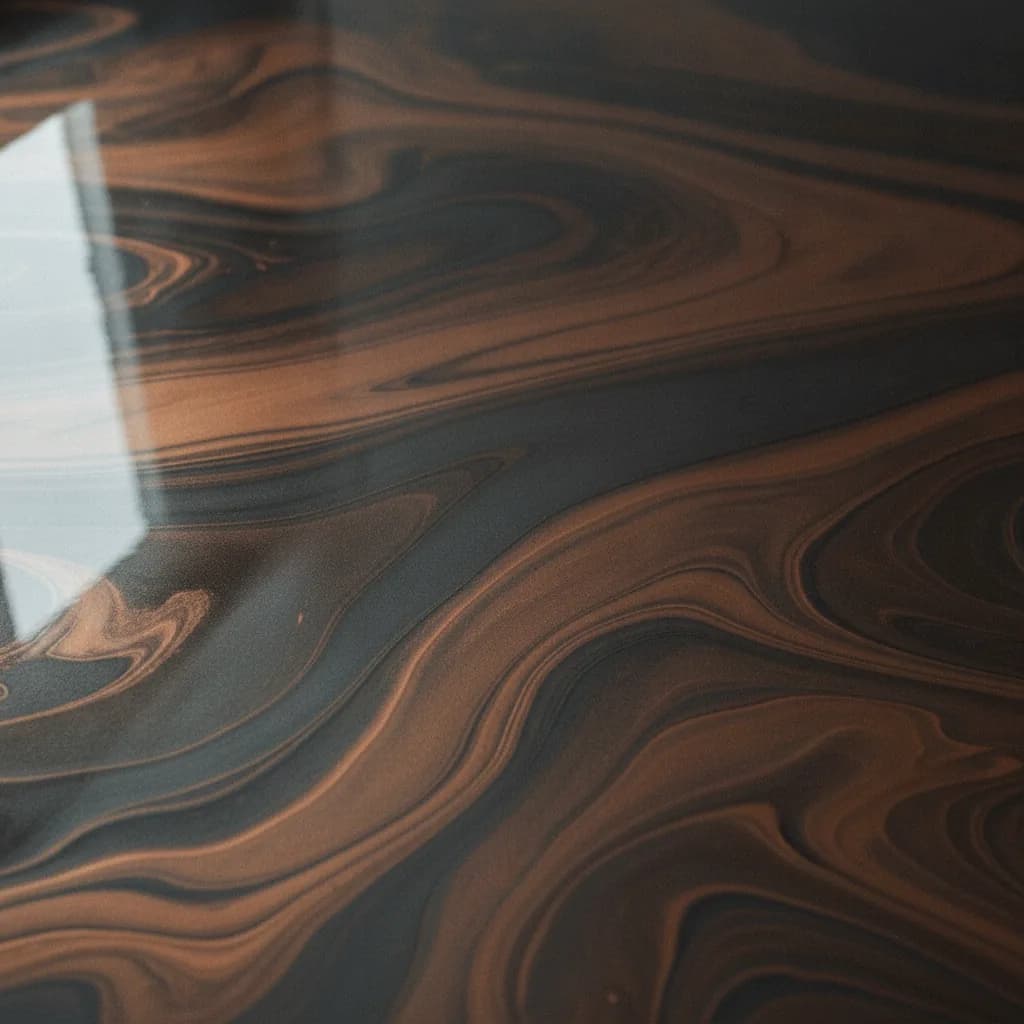
Once you decide to coat your garage floor, the next question is almost always the same: which finish? Flake, metallic, quartz, and solid color all deliver a sealed, easy-to-clean surface that shrugs off hot tires, oil drips, and Central Florida humidity. The difference is in how they look, how much texture they carry underfoot, and where each one performs best.
Here is the part most homeowners in the Orlando area never hear: all four finishes ride on the exact same foundation. Underneath the color you see is a four-layer system, a properly ground and prepped slab, a penetrating primer, the pigmented or broadcast body coat, and a clear topcoat that carries the wear. The finish you choose changes the surface, not the structure. That means you can pick purely on look, texture, and use case without giving up durability. Below is a straight comparison of all four so you can choose with confidence.
Vinyl Flake: The Most Popular Garage Finish
Vinyl flake is the finish most Central Florida homeowners picture when they imagine a finished garage. Colored chips, sometimes called flakes, are broadcast into a wet base coat, then locked in under clear topcoats. The result is a speckled, multi-tone surface that reads clean and professional without looking flat.
What it looks like: a blended field of small color chips over a base color. Blends can lean neutral gray and tan, or pop with blue, red, or custom mixes to match a car or a team. Because the chips carry multiple tones, the floor hides the little imperfections a slab collects over the years, hairline cracks, patch work, and surface variation all get visually absorbed.
Durability and texture: the broadcast chips create a naturally slip-resistant surface, which matters when you are tracking in rain from an afternoon storm. The finish is tough, wipes clean, and stands up to daily driving, dropped tools, and foot traffic. Texture is light and comfortable, not aggressive underfoot.
Best use: residential garages. Flake is the default recommendation for most homes because it balances looks, grip, forgiveness, and value. On relative cost it sits in the accessible middle of the range, which is a big part of why it stays the most requested finish. Actual pricing depends on slab condition, square footage, and chip coverage.
Metallic: High-Gloss, Marbled, and One of a Kind
Metallic is the showpiece of the group. Metallic pigments are suspended in a clear resin and then moved while the coating is still wet, which creates flowing, marbled, three-dimensional patterns that shift as you walk around the room and as the light changes. No two metallic floors ever come out exactly alike, each one is genuinely one of a kind.
What it looks like: a high-gloss, poured-stone effect with depth and movement. Think swirls of copper and graphite, silver and charcoal, or bold custom color pairings that mimic marble, molten metal, or flowing water. It is a decorative finish first, and it reads more like a designer floor than a utility coating.
Durability and texture: it wears on the same clear topcoat system as the others, so it holds up to real garage use. The surface is smoother and glossier than flake or quartz, which is exactly the look people want in this application. Because gloss shows tire marks and dust more readily than a textured floor, metallic rewards owners who like to keep the space clean.
Best use: showroom-style garages and any space meant to stand out. This is the go-to for upscale Windermere garages where the floor is part of the presentation, not just the parking surface. It also shines in home showrooms, car collections, and finished garages that double as hangout space. On relative cost, metallic typically sits at the higher end because of the artistry and hand-worked application involved. Final pricing varies with design complexity and area.
Quartz: Heavy-Texture and Built for Hard Use
Quartz systems trade the decorative wow factor for raw toughness. Instead of light vinyl chips, colored quartz aggregate is broadcast heavily into the coating to build a dense, textured surface. The look is more uniform and granular, and the feel underfoot is deliberately gritty.
What it looks like: a consistent, sand-textured finish in blended earth tones or color combinations. It reads utilitarian and rugged rather than glossy or artistic. The heavy broadcast gives it a substantial, built-up surface you can both see and feel.
Durability and texture: this is the toughest, most impact-resistant option of the four. The dense quartz body adds thickness and abrasion resistance, and the aggressive texture delivers excellent slip resistance even when wet. That combination makes it the choice where floors take a beating and where safety underfoot is non-negotiable.
Best use: commercial and high-traffic floors, plus wet or wash-down areas. Think busy work bays, shops, and any space that sees heavy rolling loads or standing water. For a hard-working Orlando area commercial space, quartz is often the right call over a decorative finish. On relative cost it usually lands above flake because of the extra material and labor in the heavy broadcast, though the exact figure depends on system thickness and square footage.
Solid Color: Clean, Uniform, and Minimal
Solid color is the simplest of the four and, for the right person, the most striking because of its restraint. There are no chips and no marbling, just a single, uniform pigmented color sealed under a clear topcoat.
What it looks like: a smooth, even field of one color, most often a clean gray, but available in a range of tones. The effect is minimal and industrial, the kind of understated look you see in modern showrooms, galleries, and design-forward garages. Because there is nothing to break up the surface, it reads crisp and intentional.
Durability and texture: it wears on the same clear topcoat as the rest, so it holds up well to daily use. The trade-off is that a plain, smoother surface hides less. Dust, tire marks, and any slab imperfection underneath are more visible than they would be on a busy flake or textured quartz floor, so it favors slabs in good shape and owners who like a tidy space. An anti-slip additive can be blended into the topcoat where grip matters.
Best use: minimalist and industrial-look spaces, accent zones, and floors where a single bold or neutral color is the design goal. On relative cost, solid color is generally the most economical of the four since it skips the broadcast media, though prep needs and area still drive the final number.
How to Choose the Right Finish
Start with the job the floor has to do. For a typical Central Florida home garage, vinyl flake is the safe, popular pick because it hides imperfections, resists slips, and offers strong value. If the garage is a statement space or a car showcase, metallic delivers the marbled, one-of-a-kind look that turns heads, a natural fit for upscale Windermere garages. If the floor is going to take heavy traffic, rolling loads, or water, quartz brings the texture and toughness that decorative finishes cannot match. And if you want a clean, modern, single-color surface, solid color gives you that minimal industrial look for less.
Then factor in your slab and your habits. A slab with visible patches and cracks pairs better with flake or quartz, which camouflage imperfections. A newer, cleaner slab can carry the smoother look of metallic or solid color. If you hate seeing dust and tire marks, lean toward a textured, multi-tone finish; if you love a glossy showpiece, metallic is worth the extra upkeep.
Remember that the durability question is largely settled before you ever pick a color. Because every finish is built on the same layered system with the same wear-carrying topcoat, you are choosing on look, texture, and use, not gambling on longevity. The best next step is a quick look at your actual slab and how you use the space, which is exactly what an on-site assessment sorts out.
Frequently asked questions
- What is the most popular garage floor finish?
- Vinyl flake is the most popular finish for residential garages. It combines a speckled, multi-color look with natural slip resistance and the ability to hide slab imperfections, all at an accessible price point. That balance of looks, grip, and value is why it stays the most requested option for Central Florida homes.
- Which garage floor finish is the most durable?
- Quartz is the toughest of the four finishes. It uses a heavy broadcast of quartz aggregate to build a dense, impact-resistant, high-texture surface that stands up to heavy traffic, rolling loads, and wet conditions. That said, all four finishes share the same wear-carrying clear topcoat, so each is built to last in normal use.
- Are metallic epoxy floors slippery?
- A metallic finish is smoother and glossier than flake or quartz, so it offers less natural grip. Where slip resistance matters, an anti-slip additive can be blended into the clear topcoat to add traction without giving up the marbled look. For consistently wet or heavy-use areas, a textured quartz system is usually the better fit.
- Do the different finishes affect how long the floor lasts?
- Not meaningfully, because durability is set by the underlying system, not the color. Every finish is installed over the same four-layer build, prepped slab, primer, body coat, and clear topcoat, and that topcoat carries the wear. You can choose your finish based on look, texture, and use case without trading away longevity.
- Which garage floor finish is the most affordable?
- Solid color is generally the most economical option because it skips the broadcast chips and aggregate used in flake and quartz. Flake sits in the accessible middle, quartz runs higher due to the heavy material and labor, and metallic typically lands at the top because of its hand-worked, artistic application. Slab condition and square footage still drive the final number for any finish.
Related services
Serving
Ready for an exact price?
Get a free, no-pressure in-home estimate. Real numbers for your home, not a phone guess.