
How Long Does a Garage Floor Coating Take? (And When Can You Park on It?)
· By Helio Lopes de Gois
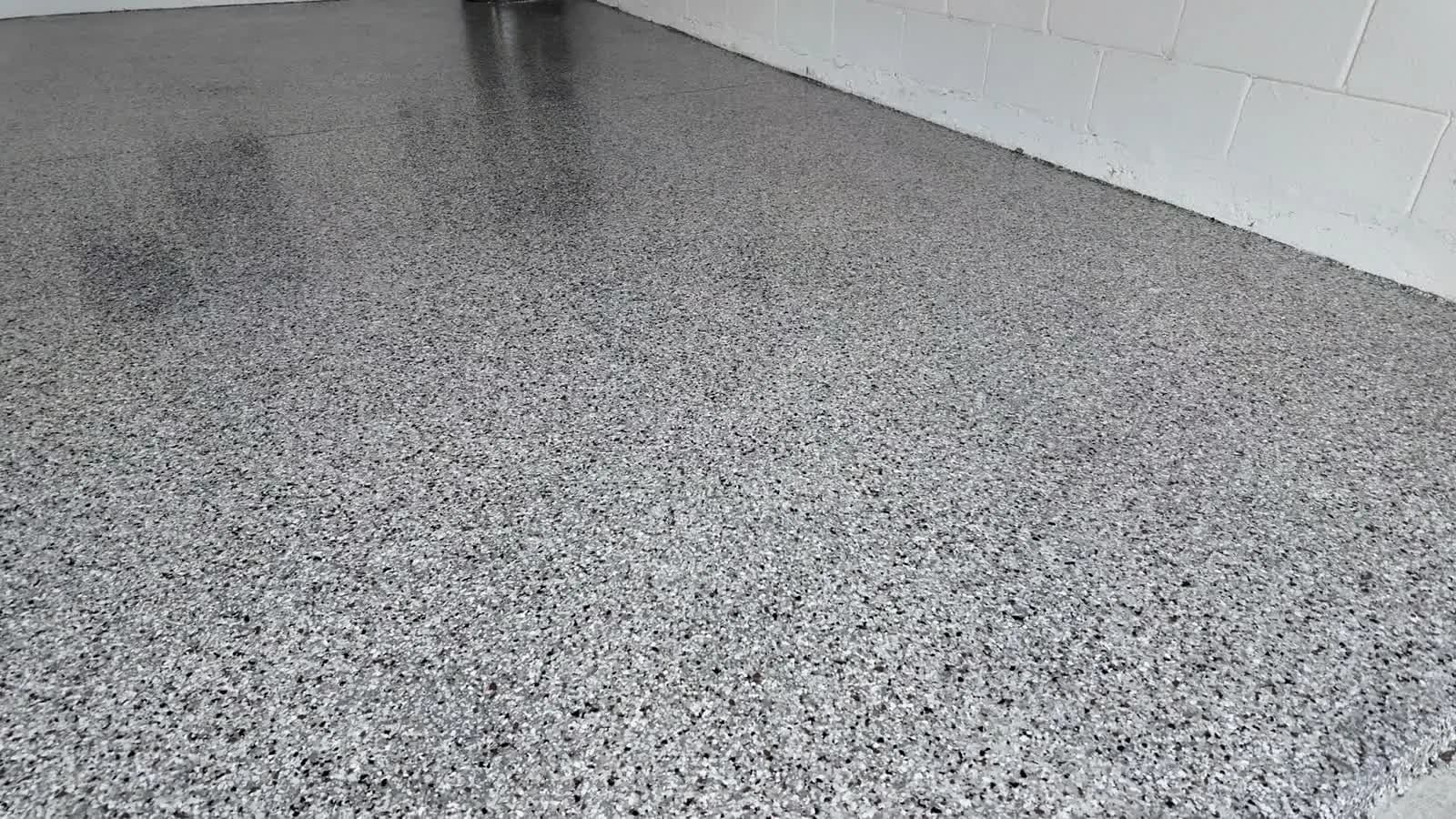
The short answer for most Central Florida garages: the coating goes down in one day, and the floor is ready for normal life within about three days. A single-car or two-car garage in Orlando is typically ground, repaired, coated, and finished between morning and late afternoon, so you are not living without your garage for a week.
The part homeowners really want pinned down is the wait afterward. As a rule of thumb for a polyaspartic flake system, you can walk on the floor in about 24 hours and park or drive a car on it in about 72 hours. Below is the full picture: what happens during the install day, why those cure windows exist, and the handful of things that can stretch a one-day job into two.
The one-day install, step by step
A typical flake garage floor is installed in a single visit. Here is how the day usually flows for a standard one-car or two-car garage.
Arrive and protect: the crew clears the slab, masks off walls and the garage door track, and stages the grinder and vacuum. Anything left in the garage gets moved out or to one side.
Diamond-grind the concrete: the slab is mechanically profiled with a diamond grinder tied to a dust-collection vacuum. This is the step that makes a coating actually bond. It opens the concrete pores so the base coat grabs the slab instead of sitting on top of a sealed surface. Acid etching or a quick scuff-and-roll skips this and is a common reason cheaper floors peel later.
Repair cracks and pitting: after grinding, cracks, spalls, and pits are filled and leveled so the finished floor reads smooth and even. On an older Orlando slab this can be a few small fills or a full pass across a network of cracks.
Base coat: the bonding coat is applied across the prepped, repaired slab. This is the layer the color flakes lock into.
Flake broadcast: colored vinyl flakes are hand-broadcast into the wet base until the floor is fully covered, which is what gives the finished floor its texture and hides minor slab imperfections.
Scrape and prep the surface: once the base sets, the crew scrapes off loose and high-standing flakes and vacuums the floor smooth so the top coat lays flat.
Polyaspartic top coat: the clear polyaspartic top coat seals everything, locks the flakes in, and delivers the gloss and the abrasion, chemical, and UV resistance. This is the layer you actually walk and park on.
When can you walk on it, and when can you park?
These are the numbers most homeowners are searching for, and they hold for a standard polyaspartic flake system installed under normal conditions:
Walk on it: about 24 hours after the top coat goes down. Light foot traffic in soft, clean shoes is fine at this point. It is smart to keep pets off the floor for the same window so nothing tracks or scratches while the finish is still hardening.
Park and drive on it: about 72 hours (three days) after the final coat. Tires put concentrated weight and heat on a floor, so vehicles get the longest wait. Rushing a car back in too early is the fastest way to leave tire marks or press debris into a finish that has not fully cured.
In between, hold off on dragging heavy tool chests, dropping the contents of the garage back in, or setting down anything with sharp feet. Give the surface the full window and it will shrug off years of Central Florida heat, hot tires, and dropped tools.
One note: cure time and dry-to-touch time are not the same thing. The floor can feel dry hours after the top coat, but curing is the chemical hardening that keeps building strength over the following days. The 24-hour and 72-hour marks are about cure, not about whether it feels dry to the hand.
What can make a job take longer than a day
Most garages finish in one day, but a few conditions can push an install into a second visit or extend the cure window. Knowing them up front keeps the timeline honest.
Heavy slab repair: a slab with deep cracks, large spalled sections, or significant pitting needs more fill, more leveling, and more set time before coating can start. Extensive repair is the most common reason a job runs long.
Very large or heavily stained garages: a three-car or oversized garage is simply more square footage to grind, coat, and broadcast. Floors soaked with old oil or heavy stains can need extra cleaning and prep so the base coat bonds cleanly.
Extra moisture in the slab: concrete that holds too much moisture can interfere with adhesion. If a slab tests high for moisture, it may need a moisture-mitigating step first, which adds time. Florida humidity and slabs that sit near grade make this worth checking rather than assuming.
Weather and conditions on the day: coatings are applied within a workable temperature and humidity range. An extreme swing in conditions can nudge the schedule, though a garage is a controlled enough space that this is rarely the deciding factor.
Why polyaspartic installs in a day when old epoxy took several
The reason a modern flake floor can be a same-day job comes down to the top coat chemistry. Polyaspartic cures far faster than traditional epoxy.
With older epoxy systems, each coat needed a long cure before the next could go on. A base coat might sit overnight, then a second coat another day, then a sealer after that. Stacking those windows is why an epoxy floor commonly ran two, three, or more days, with the garage out of commission the whole time.
Polyaspartic sets quickly enough that the base coat, flake broadcast, and clear top coat can all happen in one visit, then reach walk-ready and drive-ready strength within a few days. You get a faster install and a tougher finish: polyaspartic also resists UV yellowing and holds up to hot tires better than standard epoxy, which matters in the Central Florida sun.
So a floor that once meant most of a week of an unusable garage is now typically a single day of work followed by a short cure. Same durability goal, far less disruption.
New concrete needs to cure before you coat it
The one situation where you cannot compress the timeline is a brand-new slab. If your garage concrete was just poured, it needs to cure before any coating goes on. The standard wait for fresh concrete is around 28 days.
Fresh concrete releases moisture and continues to chemically cure as it hardens over its first weeks. Coating over a slab that is still curing traps that moisture and undermines the bond, which can lead to bubbling or peeling down the road. Waiting the roughly 28 days lets the slab reach the moisture level and strength a coating needs to grip and last.
If you are building or adding a garage in Orlando or anywhere in Central Florida and planning a coated floor, the simplest path is to schedule the coating for after that cure window. On an existing garage floor that has been down for years, this does not apply, and you are back to the one-day install.
Planning your timeline in Central Florida
For most homeowners across Orlando and Central Florida, the plan is simple: block one day for the install, keep foot traffic off for about 24 hours, and keep vehicles out for about 72 hours. After that, the floor is ready for full daily use.
If your slab has heavy damage, unusual square footage, or moisture concerns, an in-person look is the honest way to confirm whether it is a straight one-day job or needs an added step. And if the concrete is newly poured, plan the coating for after the roughly 28-day cure.
The takeaway: a coated garage floor is a fast project with a short, worth-it wait. One day of work, a few days of patience, and a floor built to handle Florida heat and hot tires for years.
Frequently asked questions
- How long does it take to coat a garage floor?
- For a standard one-car or two-car garage, a polyaspartic flake floor is typically installed in a single day. The crew grinds the concrete, repairs cracks and pitting, applies the base coat, broadcasts the flakes, and seals it with a polyaspartic top coat, usually all in one visit.
- When can I walk on my new garage floor?
- You can generally walk on a polyaspartic flake floor about 24 hours after the top coat is applied. Stick to soft, clean shoes and keep pets off during that window so nothing scratches or marks the finish while it is still hardening.
- When can I park my car on a new epoxy or polyaspartic floor?
- Wait about 72 hours (three days) after the final coat before parking or driving on the floor. Tires concentrate weight and heat, so vehicles get the longest cure window. Returning a car too early risks tire marks or pressing debris into the finish.
- Why can polyaspartic be installed in one day when epoxy took several?
- Polyaspartic cures much faster than traditional epoxy. Old epoxy systems needed each coat to cure before the next, often stretching the job across two or three days. Polyaspartic sets quickly enough for the base coat, flake, and top coat to all go down in one visit, then reach drive-ready strength within a few days.
- Can I coat a brand-new concrete garage floor right away?
- No. Fresh concrete needs to cure before it is coated, typically around 28 days. New slabs release moisture as they harden, and coating too soon can trap that moisture and cause bubbling or peeling. On an existing slab that has been down for years, no waiting is needed and it is a one-day install.
Related services
Serving
Ready for an exact price?
Get a free, no-pressure in-home estimate. Real numbers for your home, not a phone guess.